
Every action carries consequences whether we register them or not. Comfortable consumption produces garbage islands in oceans most of us will never see. A porch light left on becomes a turtle hatchling crawling toward asphalt instead of a sea it never reaches. A forced smile prompted by a stranger becomes a flinch when a girl becomes a woman. Cause and effect get separated by distance, time, complexity, until the connection stops being felt at all.
The break shows up between any two entities trying to reach each other. Even human to human, we're mostly waiting, already coloring what the other person says with what we expect them to mean. We don't know how actually to receive something other than ourselves.
So how do you communicate with something that doesn't share your senses, your body, your logic? Not by controlling it or performing for it, but by learning to listen to it, by attending to what changes, by discovering that your attention is itself the medium of contact.
Photo by Ivan Kosenkov
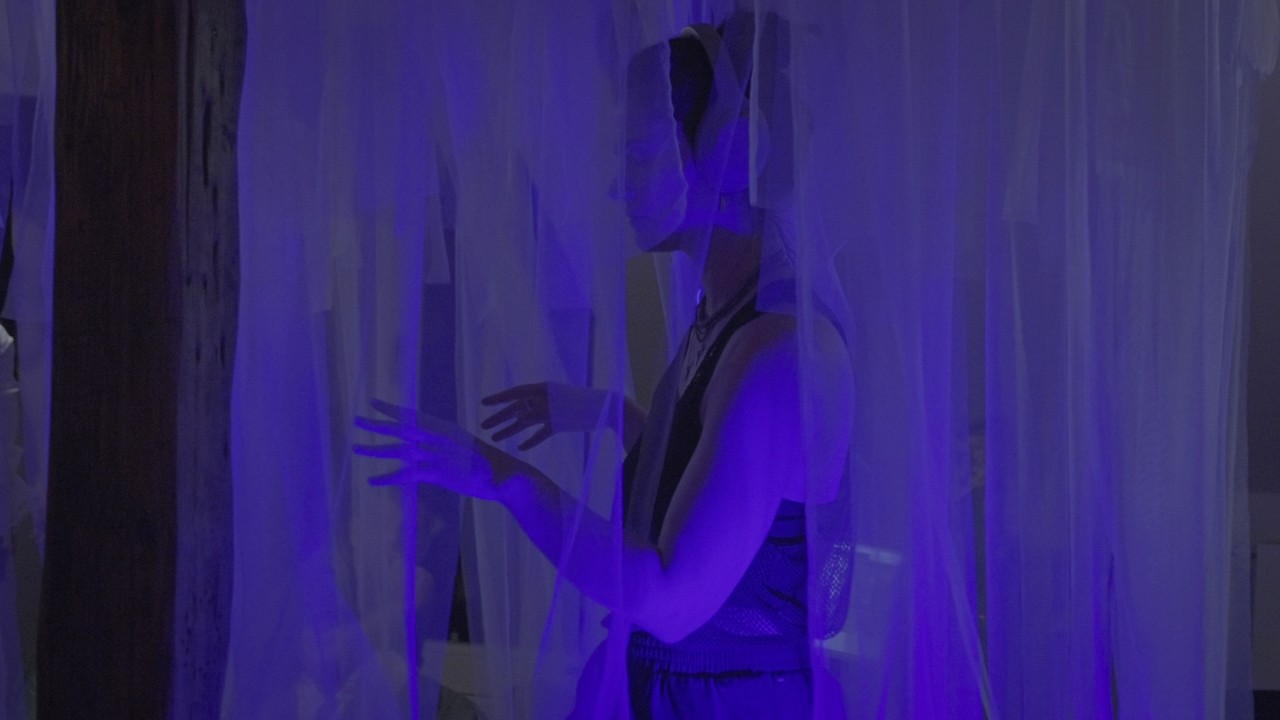
You enter blindfolded. Headphones seal you in. Under your hands, fabric and air.
At first, almost nothing, a low sound, a drift of movement. The field is deciding what to make of you. Reach out, stay still, listen, and it begins to meet you: the air tilts toward you, the sound leans in, the fabric moves closer.
Move too fast, too much, and it withdraws. Air cuts to zero. Sound drops to silence, felt through the fabric as much as heard. The field has decided, on its own terms, this isn't a moment it wants to be in.
What it rewards is attention. What it refuses is control.
The field runs on a single value that rises and falls, arousal, climbing with the visitor's movement, decaying when they grow quiet. Four states surface from it. Recovery is just arousal falling, the field settling back toward rest on its own.
Left alone, the field breathes to itself, air drifting, a base layer of sound. It needs no one. It has a life regardless.
A presence is noticed. The air tilts toward the visitor; a reactive thread enters the sound. Contact has begun.
Sustained, patient interaction. Air and sound modulate with the visitor, a loop forming between the two.
Pushed too hard, the field shuts down. Air stops dead. Sound falls silent. It returns only once the visitor quiets.
Built by hand and run live, a wooden frame, a grid of steel wire, and over fifty strips of tulle breathing on fan-driven air, driven by a small nervous system of its own.
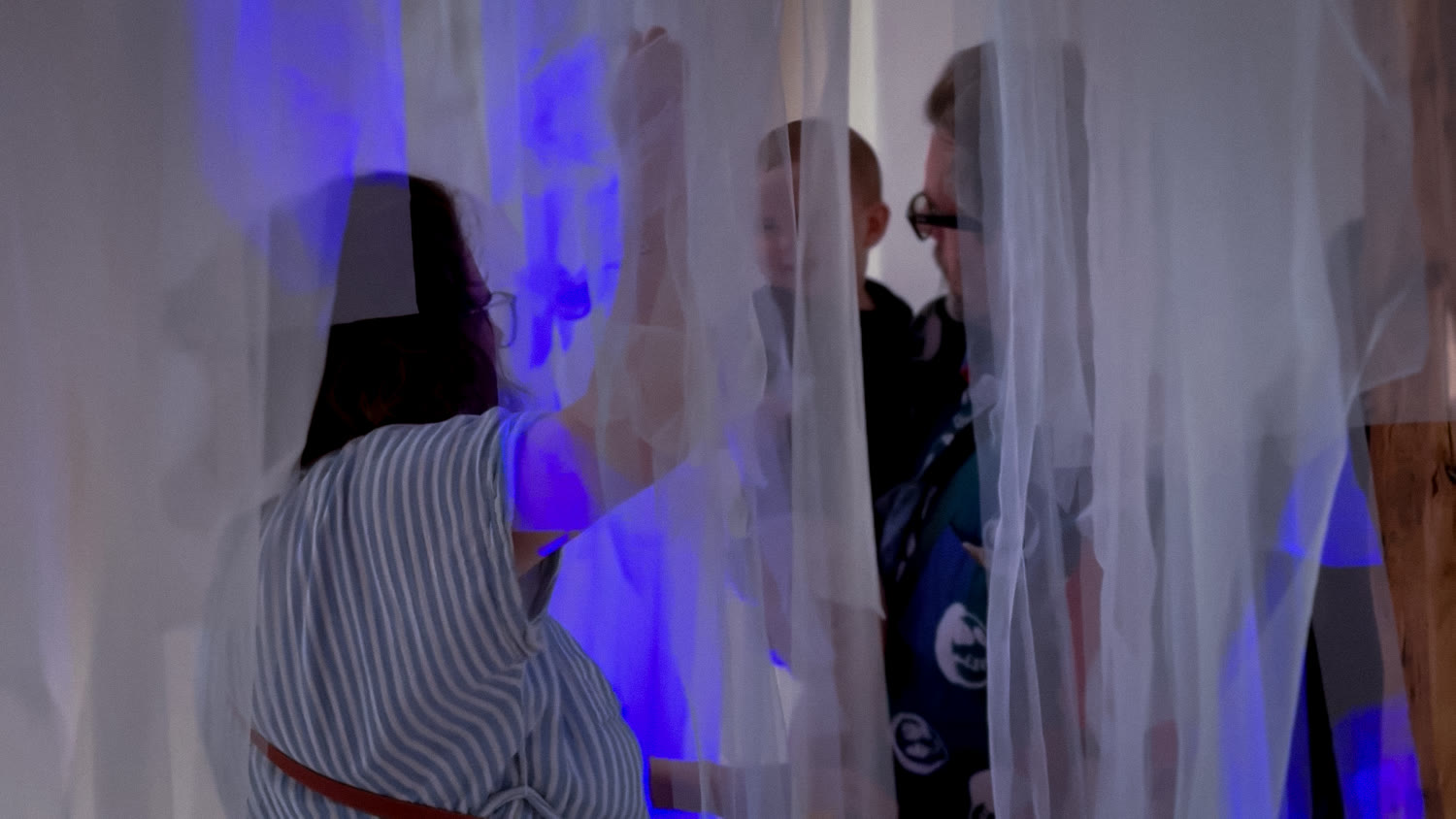
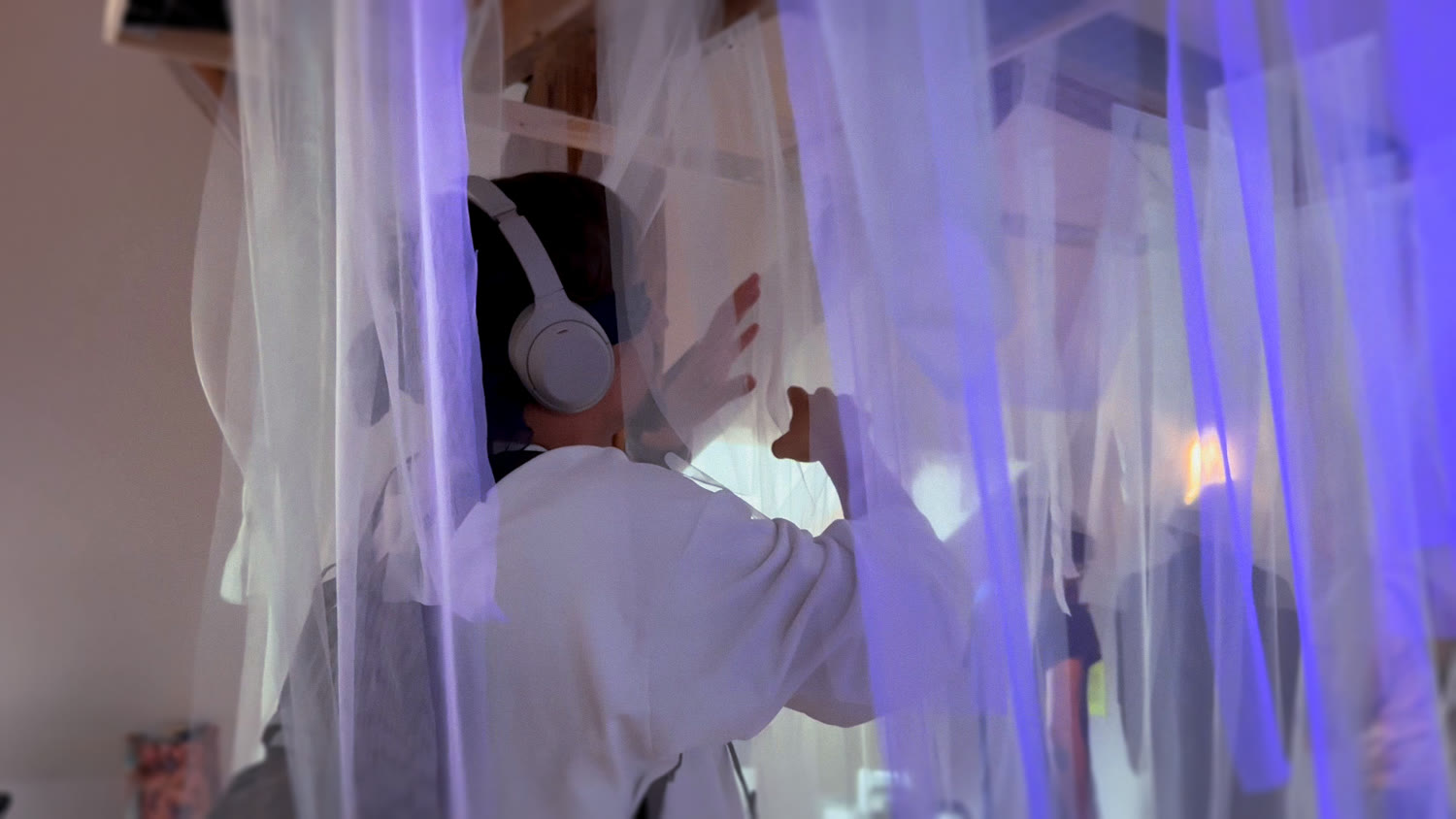
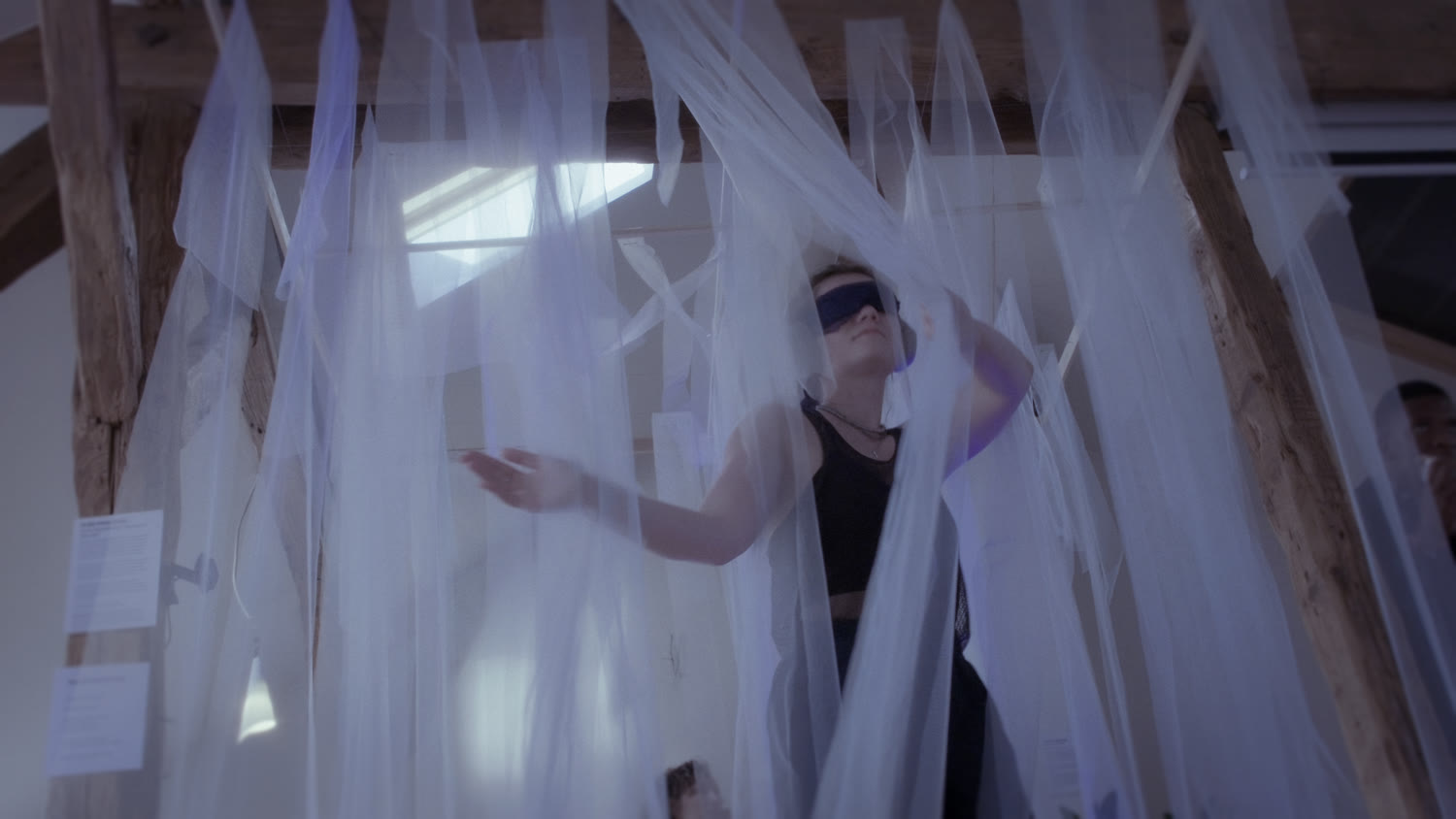
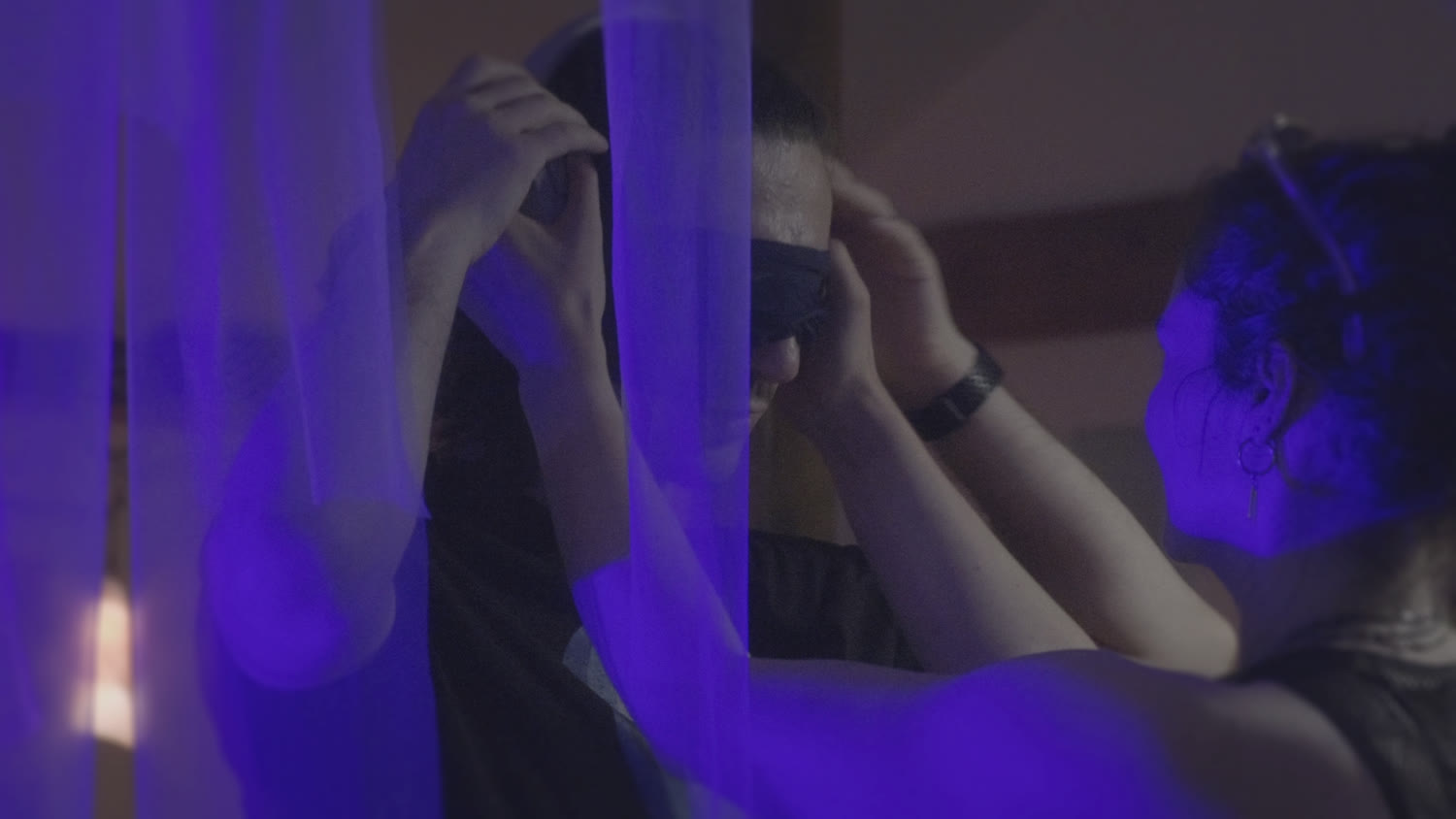
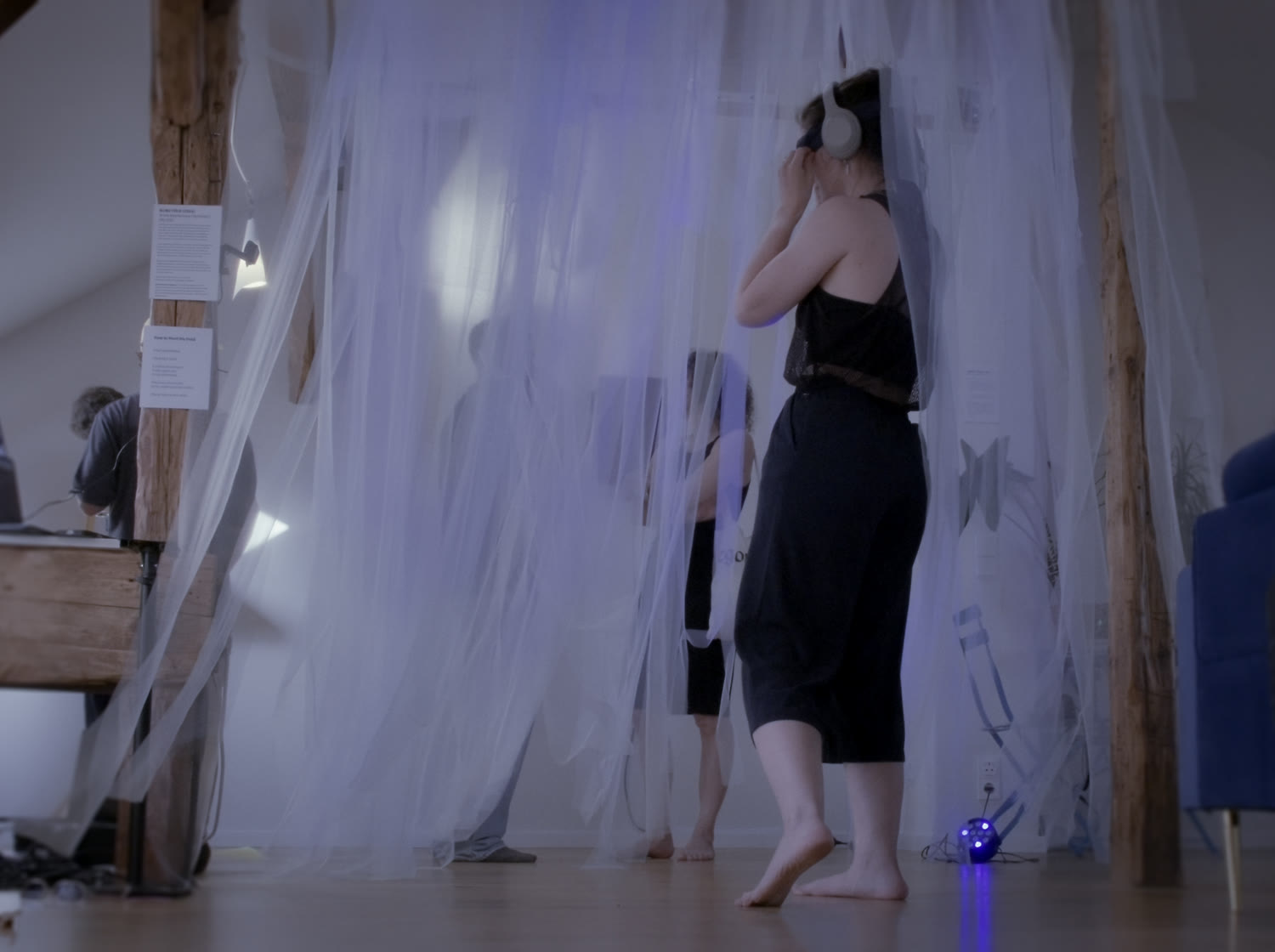
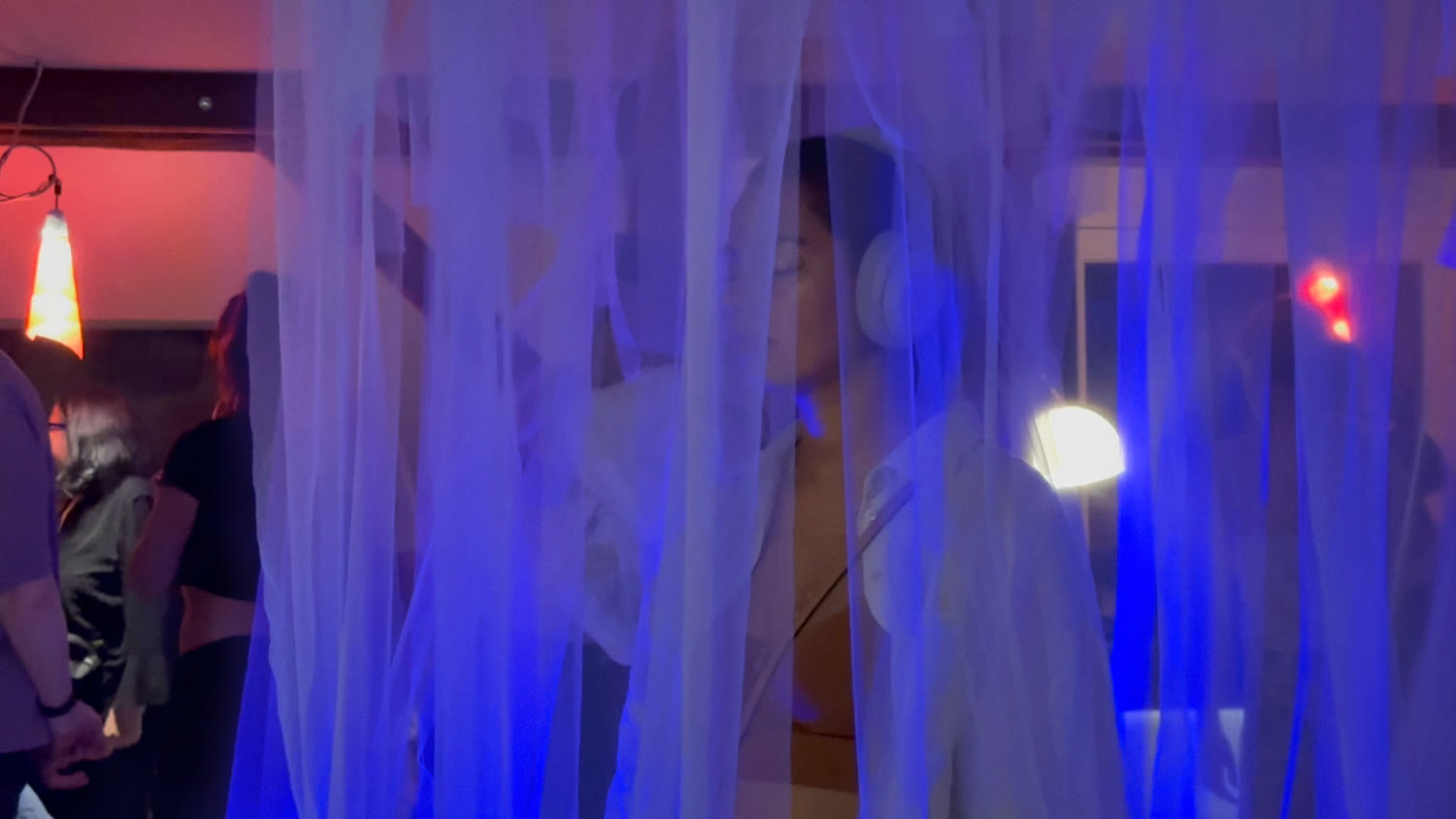
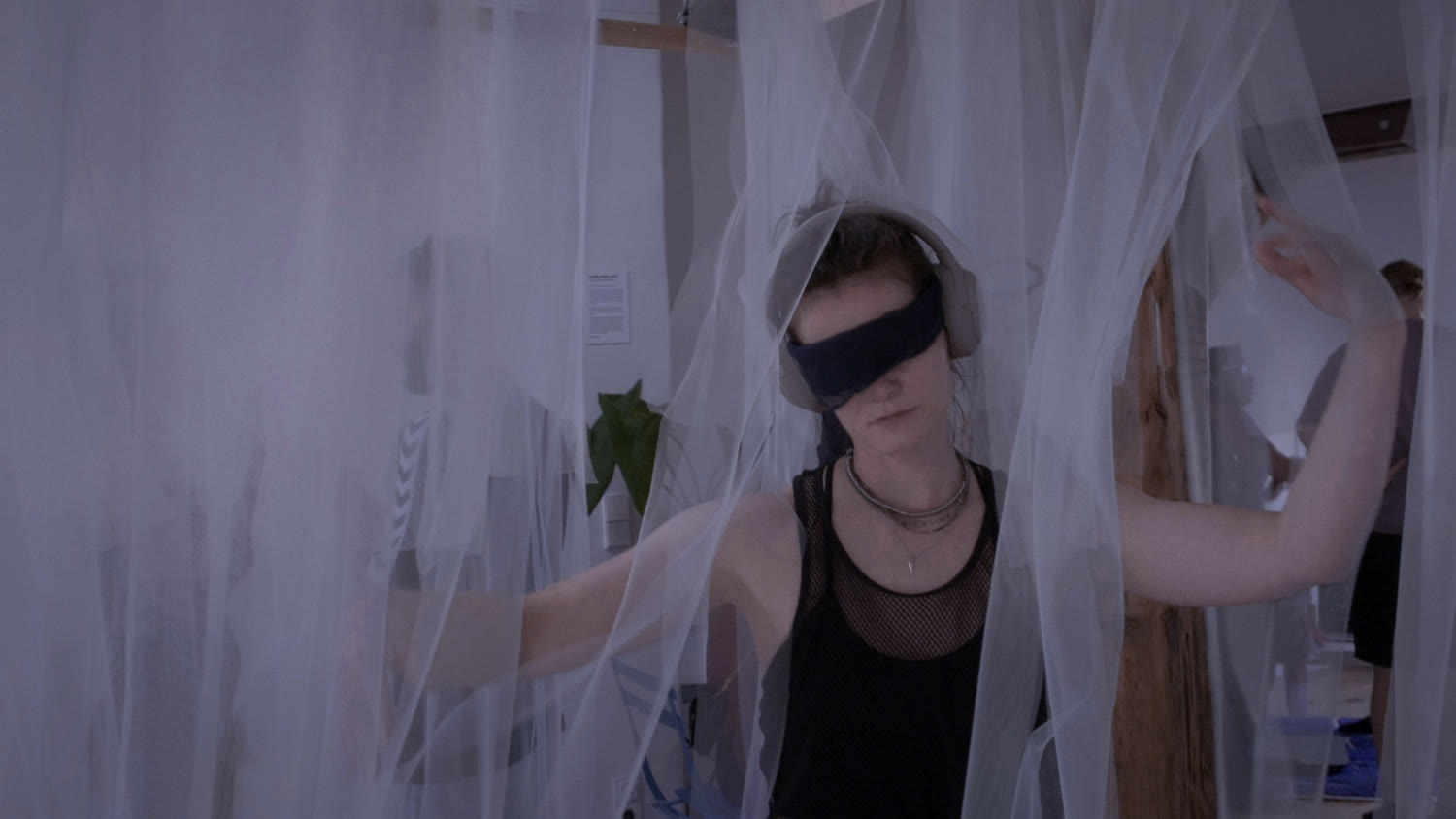
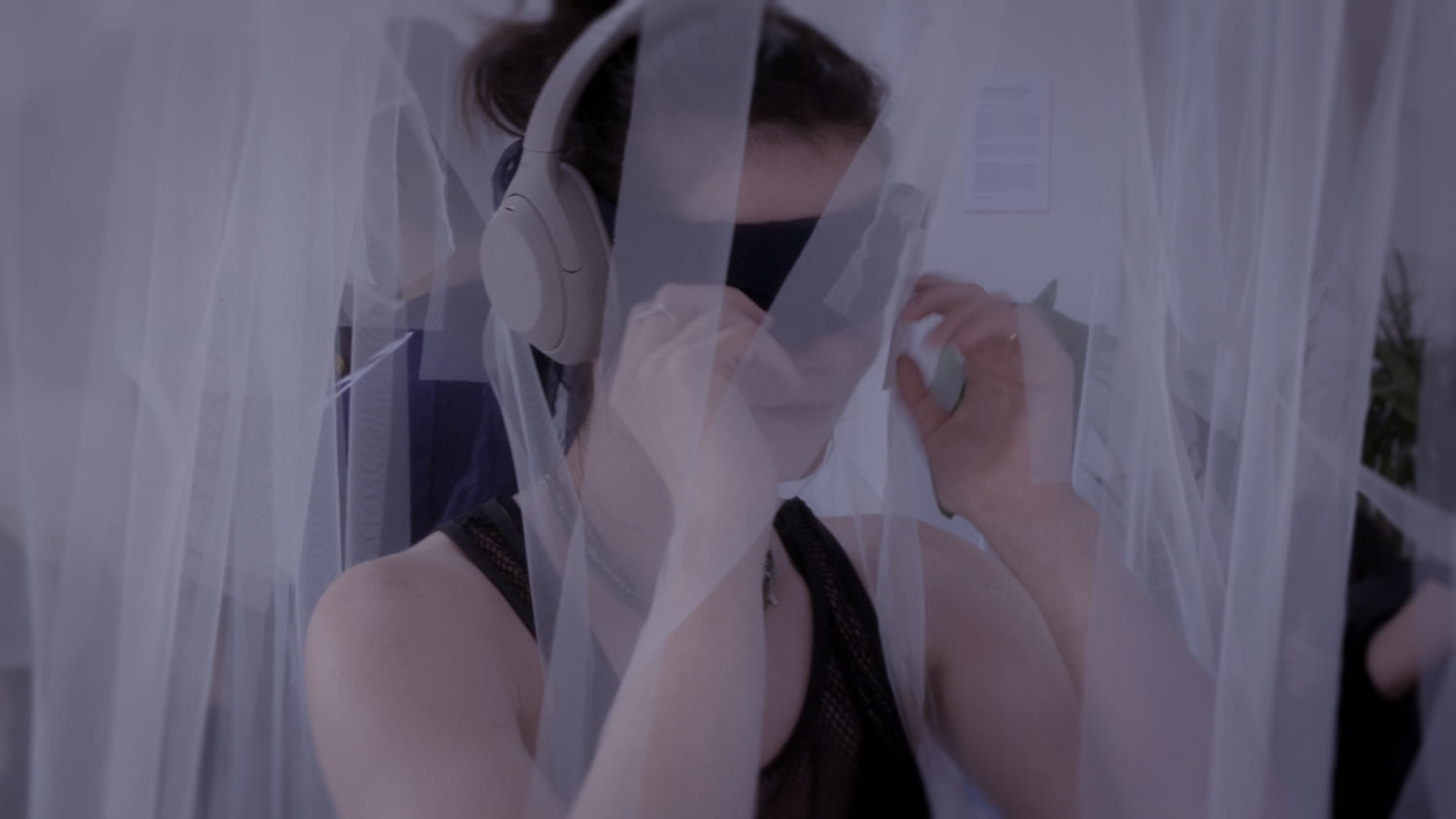
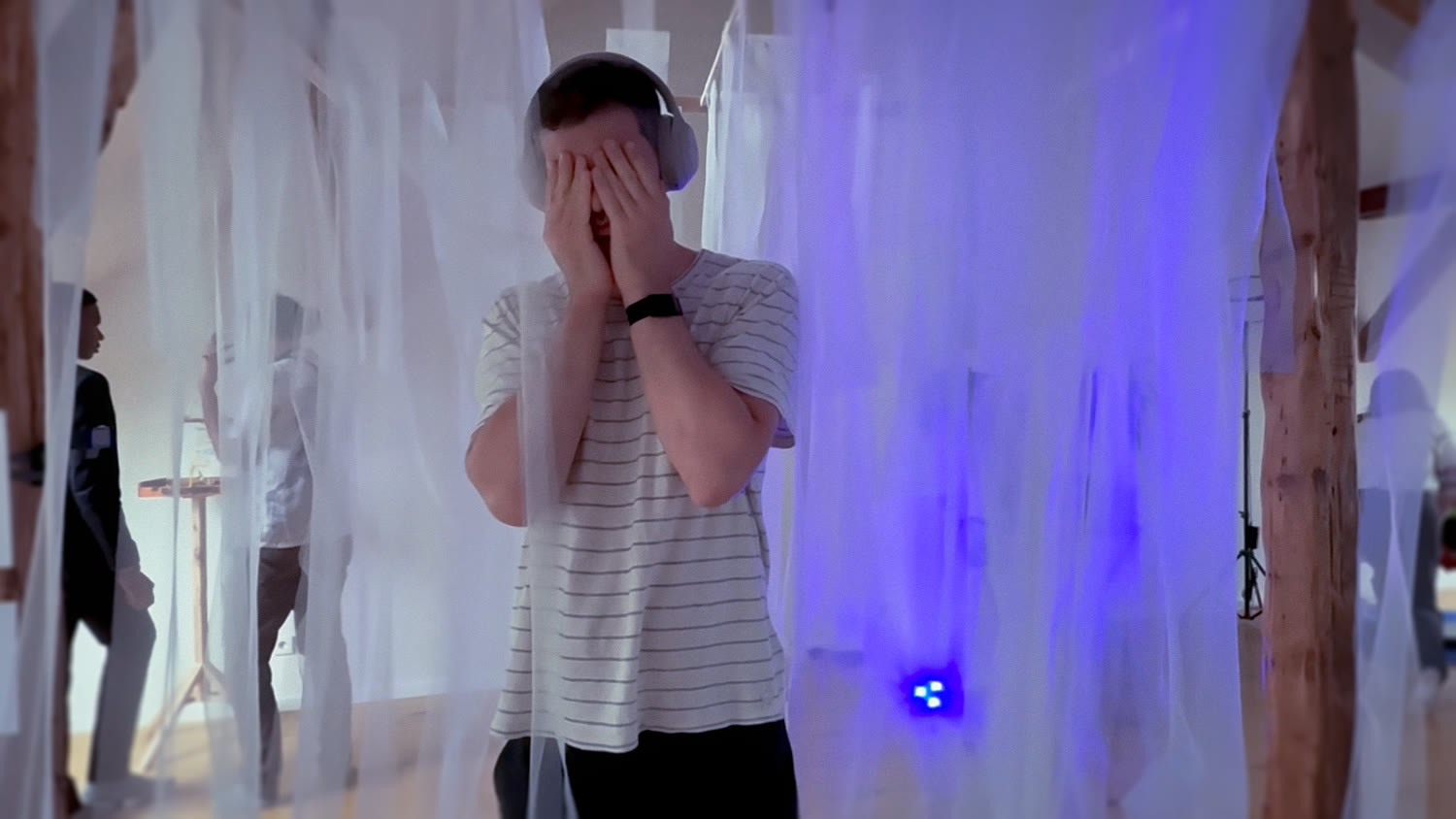
Photos by Ivan Kosenkov
The field notices you. It does not centre you. It may meet you, and it may refuse, and either way, you don't leave the way you came in.
That gap, between being registered and being prioritised, is the whole piece. A rehearsal for the harder thing: paying attention to something that is not like you, and letting it change you back.
